The World of FEED THE GODS

Order Now

Rarámuri

Cloaked in lore and mile-deep canyon shadows, the tribe is entirely unknown to the external world. Perceived as more ghost than human, the tribe has no need for warriors to defend a land that inspires nightmares.

Order Now

Location

Isolated in the mile-deep canyons of the Sierra Madre Occidental, the Rarámuri peoples of Northern Mexico maintained their way of life for centuries despite external imperial forces.

Having settled in the area over 2,000 years ago, the Rarámuri were rarely seen or heard by surrounding tribes. The Mexica (Aztec), the Chichimec tribes of the Northern plains, and most of the surrounding Uto-Aztec descendent tribes, avoided the canyons due to the bizarre "ghosts" that haunted their depths.

The Rarámuri cultivated their ability to run for extreme distances with near preternatural speed due to the elevation shift from the top of the Sierra Madre Occidental to the depths of the Urique Canyon. Casual runners can clear distances of 30 - 40 miles with ease while elite runners can cover 100 miles at a time.

Rarámuri territory is home to a vast array of climates due to its dramatic shift in elevation. It is not uncommon to find corn harvests in the high plains while discovering tropical fruits in the canyons and snow on the highest peaks.

Beliefs

Pre-columbian Rarámuri belief systems were anchored in a matriarchal-based worship of the moon. Tribal life cycles were measured in lunar phases with night being a sacred time of worship and ritual.

Rooted in animism, the Rarámuri regard all things with an inherent life-energy akin to a soul. This life-energy flows through all things and embodies specific characteristics and attributes found in nature.

The tribe focuses on harmony with all things and believes in the concept of koríma: any abundance is shared, any need is met by all. There is no such thing as debt, as there is no concept for money.

Living beings are capable of embodying additional life-energy forces or can become vulnerable to possession of malicious life-energy forces resulting in soul sickness. Before the arrival of the Spanish, there was no concept of evil for the Rarámuri. The tribe only saw living beings as being sick or healed.

However, after the arrival of the Spanish, evil was solidified with the brutality the Rarámuri witnessed at the hands of the colonizers. Lacking a word for the concept of evil, they simply referred to it as "white-flesh-monster".

Warfare & Conflicts

The Rarámuri pre-date most other tribes within their territory making it very difficult to conclude on pre-Columbian warfare or conflicts with neighboring tribes.

Surrounding tribal oral-traditions hint at ancient Rarámuri tribes being tenacious warriors who either ran their enemies off cliffs or outpaced them to exhaustion. Enemies were either beaten to death or beheaded along with portions of the enemies spine torn free.

It is important to note that these are merely stories, most likely fabricated to keep warring parties away from Rarámuri territory. Many, if not most Rarámuri, do not believe in violence or aggression and instead resolve conflict by sharing food, corn-brewed beer, and medicinal herbs.

After a brief alliance with the Zacatecatl tribes in resisting the Spanish at the end of the 16th century, the Rarámuri vanished into their canyons once again. Three hundred years would pass before they allowed any other European-Anglo person to learn of their existence once again.

Modern Day

Despite being hidden away from most of the world for centuries, the modern world eventually found the Rarámuri tribe.

The lush lands of the Sierra Madre Occidental became the target of multiple modern-day industries. Mining and logging were two of the most damaging industries that infiltrated the Rarámuri territories. The exploitation of the land has seen sizable deforestation and damage to the natural environments surrounding the area.

Drug cartels and human traffickers began to exploit the peaceful and quiet Rarámuri tribes in the late 20th century. Any form of resistance was met with brutality, murder, assassinations of tribal leaders, and intimidation.

Once again, this ancient tribal people are forced to endure the external world's conflict of power, corruption, and greed.

In 2025, Mexican president Claudia Sheinbaum returned 2,000 hectres of land back to the Rarámuri, acknowledging their autonomy, culture, and contributions to Mexico's history.

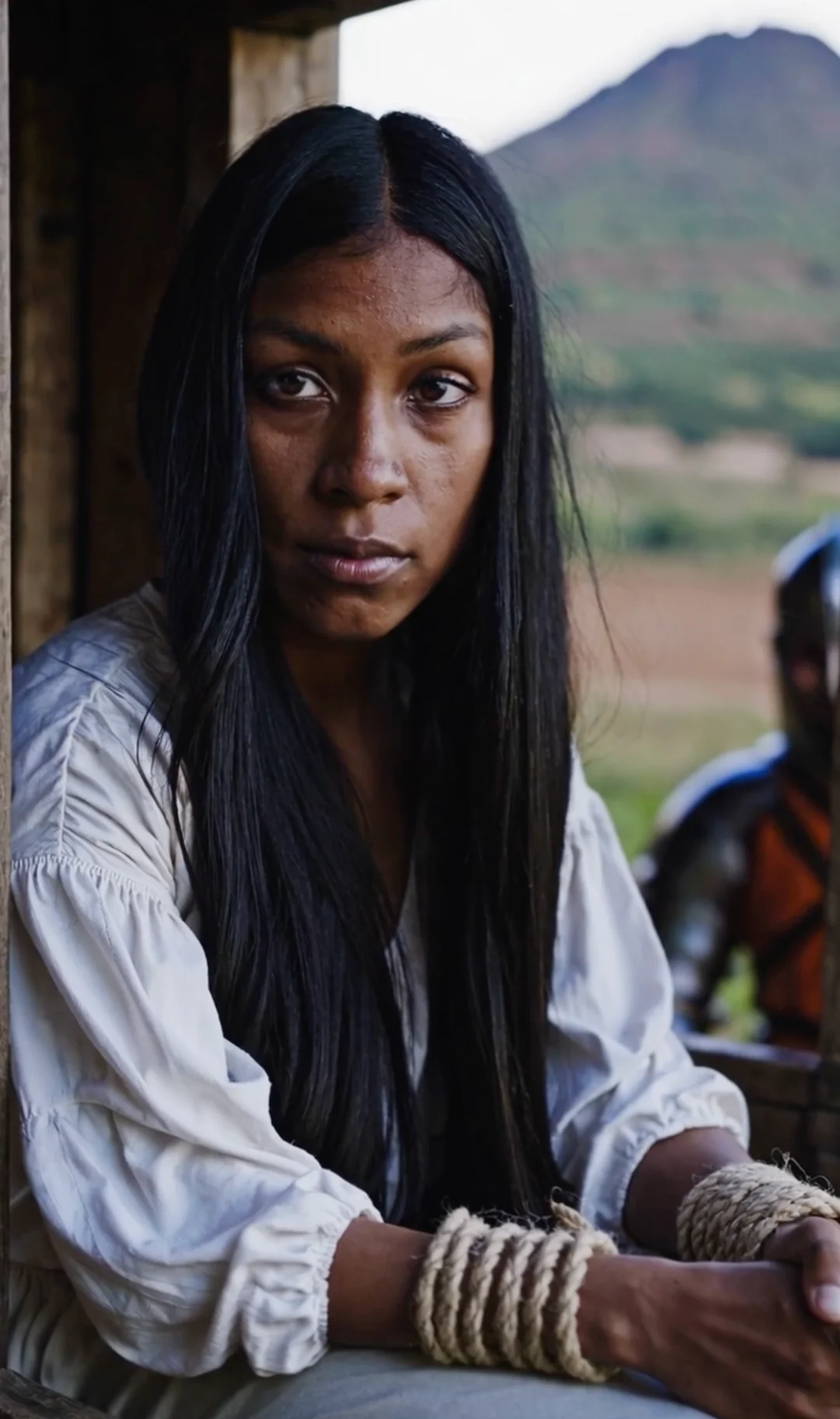
A beautiful mesoamerican woman wearing a linen dress, leather corset. She has straight black hair and a thin smirk.

Ariché

Stronger than most of the Rarámuri men, Ariché is kept at a distance by her tribe. Trained by her great grandfather Bajuí in realms and evocations, she is one of the few women to ever see beyond the Rarámuri territories.

Moró

Exiled for a life that was never his own, Moró's towering build and strength underscore his difference from anyone around him. Quiet, gentle, but never underestimated, he is Bajuí's personal project kept from the reach of others.

Rimuma

A born healer, compassionate brother to Ariché, and dedicated student, Rimuma maintains the practice and beliefs of his tribe. He never harms, he never hinders, and refuses to kill....except those that may harm his sister, Ariché.

Bimorí

The daughter of Bajuí's most powerful student, Bimorí has spent her life alongside her little brother, Moró, learning about the realms most others fear. She is an elite runner and has seen the furthest lands from her tribe's canyons.

Bajuí

Ageless and aloof, he is a loving shaman, healer, and timeless educator. Older than the tribe's collective memory, he claims to have forgotten where he comes from and prefers to focus on where others are going.

Wixáritari

The Wixáritari have been the main warlords along their territories for thousands of years. When their Zacatecatl rivals ask for help against an invading force of pale-skin cowards, mutual respect spills colonizer blood.

Order Now

Location

Found along the high plains and mountainous regions of the Sierra Madre Occidental's southern and eastern landscape, the Wixáritari have cultivated a rich existence for more than 1,000 years.

The earliest evidence of their inhabiting the land starts around 100 A.D. and has remained as strong to the present day. Nestled between the tall peaks, plateaus, and plains of the area, the Wixáritari became deeply familiar with the minerals, metals, and horticulture of their lands.

Sharing the same natural resources as the Zacatecatl, the Wixáritari learned of metal-tipped weaponry early on. Refining their craft, the Wixáritari became a blend of Zacatecatl warrior-culture and Rarámuri enigmatic mystery.

Leveraging the land itself, the Wixáritari rarely had to defend their territories due to the sheer inaccessibility of the geography. However, when warfare found their tribes, the Wixáritari rarely left survivors scattered across the dirt of their desert highlands.

Beliefs

Sacred geography plays a major role in the belief system of the Wixáritari. Each sacred site remains the embodiment and source of creation for the Wixáritari. An elemental-based worship system, the tribe acknowledges the profound balance in nature and all its elements.

The most important deity within their pantheon is Tatewari (Grandfather Fire). An immortal shaman and keeper of wisdom, he is both the fire in the center of the tukí (temple) and is the direct line to the spirit world.

The balance to Tatewari is Takutsi Nakawé (Grandmother Growth) who represents life, fertility, and Earth. She emerged after a great flood to bring life across the land. She gives life and is the source of rain and water.

Ceremonial buildings are rare among the Wixáritari, as their beliefs regards all of nature a sacred place. The spiritual realm is accessed through portals provided by the sacred Hikuri (peyote) plant. Ancestors, alternate entities, and deities commune with priests during these sacred rituals.

Warfare & Conflicts

The Wixáritari had mastered the terrain they had inhabited for more than a millennium, using their sacred geography as natural fortresses against the Spanish invasion. Sharing territory with the Zacatecatl, both tribes set aside their differences to combine their skills to resist colonization.

Skilled archers with a short-bow, the Wixáritari's obsidian-tipped arrows were a devastating response to the Spanish steel technology. Unlike the Zacatecatl's open grassland and high plateaus, the Wixáritari took advantage of the Sierra Madre Occidental's cliffs, caves, and canyons.

Combining a raid-retreat style tactic of warfare, the Wixáritari dealt massive damage to Spanish supply lines, mining efforts, and expeditions attempting to penetrate their foothills. The efficient use of the terrain allowed specialist raid units as small as 5 or 6 to stop entire Spanish army units for weeks at a time.

Wearing animal hides, heads, and sporting painted bodies, the psychological effect of the Wixáritari's warriors spread throughout the Spanish Empire. Stories of bizarre half-man half-animal creatures screaming like demons terrorized Spanish soldiers.

Modern Day

The Wixáritari have kept their culture, religion, and ancestral practices alive into the modern era. Their remote terrains and integration of sacred geography with spirituality maintained their identity despite the ongoing efforts of external colonizers.

Similar to the Rarámuri to the north, the Wixáritari have found their autonomy protected in local tribal laws and practices. National government entities have liaisons that work with tribal leaders to maintain governance over surrounding lands but both remain mutually respectful of the others authority.

International acclaim found the Wixáritari in the recent decades due to their intricate woven garments and beadwork. Though many have cultivated careers in their artistry, the majority of the Wixáritari works remain within the tribe.

As the future of Mexico begins to acknowledge and embrace the tribes that laid the foundation for the Mexican identity, many tribes, including the Wixáritari are held in high regard for their history, contribution, and resilience in the face of colonization.

A mesoamerican man wearing a white linen robe, a light green linen shirt. His hair is black, straight, parted in the middle. His eyes are calm, his expression, determined.

Haru

Chief-priest of his tribe, Haru's profound dedication to Tayaupá has kept him safe in defending Wixáritari lands. He has no fear of the Spanish colonizers, they are merely men. However, the darkness that finds his clan requires a prayer to the sacred ghosts that haunt the northern canyons.

Auí

Wife and young matriarch for the Wixáritari tribes of the north, Auí balances motherhood with tempering her husband's ambition. After losing her first daughter to forces she could not overcome, she has committed herself entirely to keeping her second daughter alive.

Siachí

The youngest daughter and resilient soul of Haru and Auí, Siachí remains captivated by the world around their territories. Despite seeing the horrors that hide in shadows and bloodshed, she remains hopeful for life and prays to catch a glimpse of the Ghost of the Canyon.

Zacatecatl

When half of the Zacatecatl are enslaved and forced to mine silver for Spanish slavers, the warlords' response is a brutal and constant assault that introduced the Conquistadors to steel piercing obsidian tipped combat.

Order Now

Location

The buffer zone between the southern Mexica empire of Tenochtitlan and the nomadic civilizations of the north, the Zacateactl region spanned from central Mexico to the foothills of the Sierra Madre Occidental.

Evidence of the Zacatecatl dates back to 100 AD. Massive ceremonial halls and astrologically based ritual architecture shows the advanced understanding the Zacatecatl had about the stars and lunar cycles. Ancient ruins like La Quemada and Altavista indicate a profound respect for burial rituals and the dead due to the size of their priests tombs.

The Zacatecatl maintained a profound warrior culture for more than a millennium before a major collapse dispersed their civilization across the western and central parts of Mexico. Major portions of their tribe simply vanished without a trace, leaving the remaining populations to adopt a nomadic way of life.

The word "Zacatecatl" is Nahuatl for "An area of abundant grass". The Mexica named the Zacatecatl after their terrain but included a warning for their surrounding tribes. The Zacatecatl region was dangerous and best left alone.

Beliefs

Deeply held solar and lunar rituals indicate the Zacateactl believed in the same sun and moon deities as their predecessors.

The Sun Pyramid was a huge structure built in perfect alignment with the equinoctial solar path that bisected the sacred Picacho Pelón hill. Within the Sun Pyramid, priest-governors were buried in ornate tombs and left undisturbed for centuries.

Lunar worship is also indicated by the 28-column lined Column Hall that served as a lunar calendar and place of lunar worship.

The Zacatecatl regarded both the sun and moon as deities that could embody human hosts. Priest-governors and leaders were believed to have been embodied by such deities and could also embody descendants with inherited powers.

Human sacrifice was a prominent part of their solar worship. Solar gods required human-soul energy to remain strong enough to maintain the world. Human subjects were regarded with great respect for their sacrifice and seen as the most important parts of the ritual sites.

Warfare & Conflicts

One of the most feared tribes for over a thousand years, the Zacatecatl cultivated a warrior heritage that remains present to modern day.

From their ancient roots of fierce spear and edge weapon combat, the Zacatecatl maintained their territories despite multiple invasion campaigns from surrounding rival tribes. The Mexica, the most prolific warrior tribe in Mexican history, chose to avoid the Zacatecatl territory for centuries. Some theories posit the Mexica actively absorbed the Zacatecatl populations over time rather than attempt to conquer them.

By the 16th century, the Zacatecatl perfected mineral and metal utilization in their weaponry. Edge weapons were lined with copper, silver, and obsidian mined in the caves of their territories. Archery skills were refined with obsidian tipped arrows, providing some of the first tribal technologies to rival Spanish steel.

The Zacatecatl were a major addition to the Cuauchichil Alliance against the Spanish. Providing skilled nomadic warriors to the Cuauchichil War, they played a pivotal role in both intelligence gathering from Spanish depots and nocturnal warfare across the northern areas of Durango territories.

Modern Day

As assimilation and colonial forces moved into the Zacatecatl area throughout the last 400 years, the last remaining Zacatecatl vanished into modernity.

The brilliance and ancient heritage of the Zacatecatl has been immortalized in both the region's name and the ceremonial artifacts kept preserved out of respect for the warrior tribe.

Throughout the state of Zacatecas multiple heritage sites are kept in pristine condition to honor the ancient warriors.

The tribe's language is considered extinct and no genetic indicators of "pure" Zacatecatl ancestry can be found in the Mexican population.

However, recent archaeological research has led to a potential origin of the Zacatecatl people being direct descendants of the Toltec civilization.

Due to these two major factors, the ancient tribe joins so many other ancient peoples that remain immortalized in their history and untouched by modernity.

Rutukúri

Covered in black warfare tattoos and tribal sigils, Rutukúri is a feared warrior and war-party intelligence scout. A highly skilled archer and edge-weapon specialist, he knows the weakest parts of Spanish formations and armor.

Grass

Captured by the Spanish during his first hunt, the young boy known as Grass understands more than most. A quick study under the tutelage of the basque quartermaster, he's already learned Spanish and Euskara, and how to keep secrets.

Ra’ta Dxí

Soft spoken and gentle, Ra'ta Dxí was captured along with two of the elders in her clan. Draped in linens and blankets, she keeps Grass safe in captivity. She does her best to hide her plans of escape and the hope to hold her baby for the first time.

The Spanish

Sailing from across the Atlantic, the Spanish brought disease, death, and enslavement to the indigenous tribes of Mexico all in the name of God. Using the Roman Catholic church as the final authority for conquest and bloodshed.

Order Now

Location

The capital of New Spain was built on the ruins of the most powerful city in the Mexica empire: Tenochtitlan.

The Spanish called the new capital Ciudad de México, utilizing the remnants of the destroyed Mexica city to build their fortifications along Lake Texcoco. In 1524, the area was a burgeoning Spanish settlement and acted as the main hub of naval traffic for the expansion of the Spanish Empire.

By 1546, silver deposits were discovered northward in the Zacatecatl territories. This discovery spurred more investment in northern expansion, leading to Governor Francisco Ibarra's founding of the Durango settlement. Multiple tribes were captured and enslaved by Spanish forces to work in silver mines dug on their territory.

In 1563, Governor Ibarra officially declared his settlement the capital of Nueva Vizcaya. The surrounding areas were then claimed for silver exploration, pushing the Spanish forces further north into the Mexican highlands and Sierra Madre Occidental.

Beliefs

The Spanish utilized religious beliefs as a means to exploit the land, people, and resources of Central America. Catholicism was the most popular belief system that enabled such blatant imperialism. The Spanish Crown often declared God was the one who drove their exploration in the name of saving "savage" souls.

After destroying many of the cities and key infrastructures of the Mexica and surrounding tribes, the Spanish enslaved the populations that were left. This enslavement brought forced assimilation and subjugation of native populations in the name of "European Civility". The Spanish believed that indigenous populations were inferior and could only be redeemed by their acceptance of Spanish culture.

Throughout the ensuing centuries, the Spanish Crown further embraced the Catholic Church. A blend of spiritual and secular motives, both institutions leveraged their powers to reinforce the others exploitation of the indigenous populations.

Warfare & Conflicts

The Spanish arrived with the advantage of advanced warfare compared to the indigenous tribes. Steel armor, swords, canons, naval power, and arquebuses (precursor to the rifle) were more powerful than the wood, copper, and stone  weapons of the indigenous tribes.

Additionally, the Spanish took advantage of their appearance with the indigenous tribes spiritual beliefs. Tribes had never seen people with white skin, steel armor, or different colored eyes. This drastic difference in physical characteristics allowed the Spanish to convince native tribes they were descendent gods, returning to claim what was theirs.

Horrendous terror tactics were also used against native populations. Spanish conquistadors often burned entire villages, destroyed sacred relics, and instilled a deep sense of fear in the native populations. This brutal approach spread an inherent apprehension to tribes that considered resisting the Spanish Empire's expansion.

Modern Day

The Spanish Empire came to an end in the early 19th century. The result came after several international conflicts and wars that resulted in a devastating loss of territory, resources, influence, and military power.

As the 20th century dawned, the Spanish had little recourse but to return to their own lands and prepare to endure a war fought within their own borders.

In the 21st century, the Spanish Empire and the various conquests it held are now solidified in history. Yet, the decedents of the oppressed populations have not forgotten the brutality waged upon their ancestors.

The country of Mexico has emerged as one of the most prolific and powerful nations on the global stage. A nation that emerged from imperial terror, ancestral resistance, and a deep sense of pride, Mexico honors its indigenous roots by uplifting underrepresented tribes and returning the land back to the people who have always called it home.

Maestro
Cristobal Cordoba

Castilian noble and tenured military leader, Maestro Cordoba leads the Tercio Cordoba north towards uncharted fortune. He keeps his mission clear and his past forgotten.

Capítan Aguirre

Castilian naval expert and self-proclaimed wine aficionado, Capítan Aguirre serves the Tercio Cordoba alongside his old friend and fellow conquistador, Maestro Cordoba.

Augustine de Silva

A Basque shepherd turned global explorer and tribal multi-linguist, Augustine's most dangerous with a ledger and quill. He keeps his tribal roots to himself to avoid being burned by the Catholic Church.

Juan Soto de Escribano

The apprehensive scribe from the kingdom of Aragon, Juan Escribano would rather read novellas and critique characters than sweat in the New Spain sun.

Cajó Ramos Seville das Ilhas

Privateer by choice and Portuguese by birth, Cajó Ilhas does not mind openly mocking his Castilian counterparts or trading with the tribes.

Sign up to receive updates on new content and future events.

Thank you! Your submission has been received!